
How Nutrition Specifically Impacts Anxiety and Depression In a Powerful Way
On several occasions, I’ve found myself in my kitchen around 4:15 PM, staring at a box of stale goldfish crackers like they hold the secrets to the universe. My heart is doing a weird, fluttery tap-dance in my chest. Is it an impending panic attack? Is it the third cup of coffee I drank on an empty stomach because I was too busy hunting for a lost sneaker to eat toast? Or is it just the crushing weight of being a person in the world right now?
Usually, it’s all three. But mostly, it’s the coffee.
We’ve been told for decades that anxiety and depression live entirely between our ears. We’re told it’s a “chemical imbalance” in the brain, a tidy little phrase that makes it sound like we just need to recalibrate a liquid level in a beaker. But that’s a lie. Or, at the very least, it’s a very small part of a much messier story. Your brain isn’t a lonely island. It’s more like a noisy, demanding neighbor that shares a very thin wall with your digestive system.
If your gut is a disaster zone, your brain is going to be a disaster zone too.
The Phone Line You Can’t Unplug
I used to think “gut feeling” was just a metaphor for being nervous. It isn’t. You have a physical connection called the Vagus nerve. Think of it as a thick, fleshy fiber-optic cable running from your brainstem all the way down to your colon. It’s a two-way street, but here’s the kicker: about 80% to 90% of the information traveling along that wire is going up, from the gut to the brain.
Your stomach is talking to your head constantly. And usually, it’s complaining.
If you’ve ever felt “butterflies” before a big presentation or had to sprint to the bathroom during a high-stress week, you’ve felt the Vagus nerve in action. But it goes deeper than just nerves. Your gut is lined with more than 100 million nerve cells. It’s so complex that scientists literally call it the Enteric Nervous System (ENS), or the “second brain.” This second brain doesn’t write poetry or solve Sudoku puzzles, but it does decide how you feel when you wake up in the morning.
When the bacteria in your gut—the trillions of tiny, invisible tenants living in your intestines—are happy, the Vagus nerve sends “all clear” signals. When they’re pissed off because you’ve fed them nothing but refined sugar and stress-induced wine for three days, they send “code red” signals. Your brain interprets those signals as anxiety. It interprets them as “the world is ending and I am a failure.”
It’s not all in your head. A lot of it is in your small intestine.
Serotonin: The Great Gut Deception
We’ve all heard of serotonin. It’s the “happy chemical.” It’s what most antidepressants try to keep circulating in your brain for longer. If you’re depressed, you assume your brain is just stingy with the serotonin.
Wrong.
Roughly 95% of your body’s serotonin is produced in your gut. Let that sink in. The very chemical that regulates your mood, your sleep, and your appetite is manufactured in the same place where you digest that greasy taco. If your gut lining is inflamed or your microbiome is out of whack, your serotonin production tanks. You can take all the deep breaths and do all the yoga you want, but if the factory is broken, the product isn’t hitting the shelves.
I spent years trying to “think” my way out of a low mood. I tried affirmations. I tried journaling. I tried “manifesting” a better attitude while I was subsisting on diet soda and frozen pizzas. It’s like trying to run a high-end gaming PC on a dial-up connection. It doesn’t matter how good the software is if the hardware is failing.
The Sugar Rollercoaster and the Anxiety Loop
Let’s talk about the 3 PM slump. You know the one. You’re at your desk, or you’re in the carpool line, and suddenly you feel like you could sleep for a thousand years. You grab a granola bar or a sweetened latte to “power through.”
Ten minutes later, you feel great. Twenty minutes later, your heart starts racing. You feel jittery. You start worrying about that email you sent yesterday. You wonder if your friends actually like you. You’re convinced you’re getting fired.
That isn’t a personality flaw. It’s a glucose spike followed by a precipitous crash. When your blood sugar drops too fast, your body releases cortisol and adrenaline to try and stabilize things. These are the “fight or flight” hormones. Your brain feels that rush of adrenaline and looks for a reason why it’s there. Since you aren’t being chased by a tiger, your brain invents a tiger. It decides the tiger is “your husband’s weird tone this morning” or “the looming climate crisis.”
We are literally eating ourselves into panic attacks.
I’ve had to learn the hard way that a breakfast of just coffee and a muffin is a recipe for a 2 PM meltdown. If I don’t give my body fat and protein to slow down that sugar absorption, I’m basically handing my car keys to my anxiety and letting it drive me into a ditch.
The Microbiome: A Very Picky Garden
Your gut is a garden. I hate that analogy because it sounds like something written on a wooden sign at Hobby Lobby, but it’s accurate. You have “good” bacteria and “bad” bacteria. The good guys (like Lactobacillus and Bifidobacterium) help break down food, produce vitamins, and keep your immune system from attacking itself.
The bad guys thrive on junk. They love sugar. They love artificial sweeteners. They love the preservatives that keep a Twinkie fresh for thirty years.
When the bad guys take over, it leads to “dysbiosis.” This causes inflammation. And here is where it gets really interesting (and depressing): inflammation in the gut leads to inflammation in the brain. This is the “Cytokine Theory of Depression.” Scientists are finding that people with clinical depression often have high levels of inflammatory markers in their blood. Their brains are literally on fire.
How do we put the fire out? Not with a “detox tea” or a “seamless” transition to a raw vegan lifestyle. That’s nonsense. You do it by feeding the good guys what they actually want.
The “Must-Eats” for a Sane Brain
I’m not a nutritionist, but I’ve spent enough time reading clinical trials to know that some foods are non-negotiable if you want to keep your head on straight.
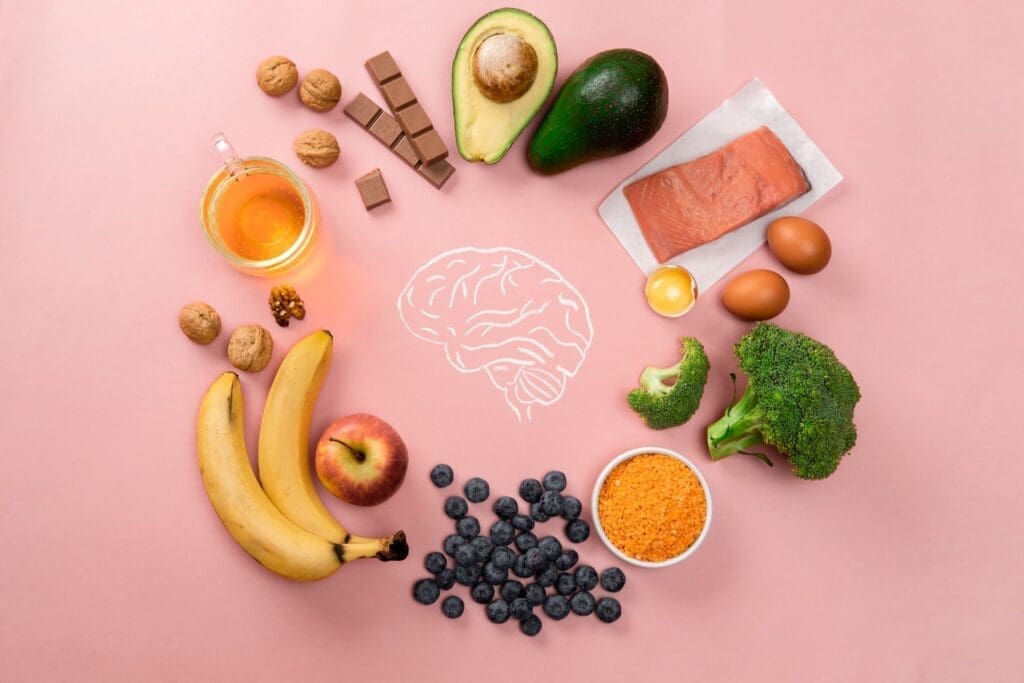
- Fermented Everything: Sauerkraut, kimchi, kefir, kombucha. I know, some of this stuff smells like a gym bag that’s been left in a hot car. Eat it anyway. These foods are packed with live probiotics that colonize your gut and start shouting down the bad bacteria. I started eating two tablespoons of raw sauerkraut every morning. It’s disgusting. I hate it. But my brain feels “quieter” afterwards.
- Fiber (Prebiotics): Probiotics are the workers; prebiotics are their lunch. Think garlic, onions, leeks, and asparagus. If you aren’t eating fiber, your good bacteria are starving to death. And when they starve, they start eating the mucus lining of your gut. Yes, your bacteria will literally eat you from the inside out if you don’t feed them a salad.
- Omega-3s: Oily fish like sardines or salmon. Your brain is about 60% fat. If you aren’t eating high-quality fats, your brain cells can’t communicate. It’s like trying to talk through a tin can with a frayed string.
- Magnesium: I call this the “chill pill.” It’s found in pumpkin seeds, spinach, and dark chocolate. Most of us are wildly deficient in magnesium because our soil is depleted. When you’re low on magnesium, your nervous system stays in “high alert” mode. You can’t relax. Your muscles are tight. Your jaw is clenched. Take the magnesium. Eat the chocolate.
The Alcohol Lie
We need to talk about the “Mommy Needs Wine” culture. I love a glass of Malbec as much as the next exhausted woman, but we have to be honest about what it’s doing to our gut-brain axis.
Alcohol is a gut-bomb. It’s a toxin that kills off beneficial bacteria and irritates the lining of your intestines, leading to “leaky gut.” This allows undigested food particles and toxins to slip into your bloodstream, triggering—you guessed it—more inflammation.
Ever heard of “hanxiety”? That 4 AM wake-up call after a night of drinking where your heart is pounding and you’re reviewing every awkward thing you’ve said since 2004? That’s your gut-brain axis screaming for help. The alcohol has depleted your GABA (the neurotransmitter that makes you feel calm) and wreaked havoc on your microbiome. You aren’t just hungover; you’re chemically incapable of feeling peace.
I’ve had to drastically cut back. Not because I’m a saint, but because the “price” the next day is too high. My mental health can’t afford the bill that a second glass of wine sends.
The Reality of “Clean Eating” While Parenting
Look, I know what you’re thinking. “I have three kids, a mortgage, and a job that expects me to be available 24/7. I don’t have time to ferment my own cabbage or sear wild-caught salmon every night.”
I get it. Some days, dinner is a handful of nuggets the kids didn’t finish and a protein bar that tastes like chalk.
The goal isn’t perfection. Perfection is a stressor, and stress kills your gut bacteria just as fast as sugar does. The goal is “better than yesterday.” Maybe you swap the afternoon soda for a seltzer. Maybe you add a handful of spinach to your eggs in the morning. Maybe you buy the expensive yogurt with the “live cultures” label instead of the one that’s basically a melted milkshake.
We spend so much time worrying about our kids’ nutrition. We make sure they have their veggies and their vitamins. We obsess over their sugar intake because we don’t want them bouncing off the walls. Why don’t we give ourselves that same grace? Why do we treat our own bodies like trash compactors and then wonder why we feel like garbage?
Your Gut Isn’t a Mystery
We’ve been conditioned to think that our health is something that happens to us, rather than something we participate in. We wait for a diagnosis so we can get a prescription. And don’t get me wrong—medication is a lifesaver for many. But it’s not the whole story.
If you’re struggling with that low-level, humming anxiety that never seems to go away, or a cloud of depression that makes the simplest tasks feel like climbing Everest, look at your plate. Not with judgment, but with curiosity.
What are you feeding? Are you feeding the fire of inflammation, or are you feeding the factory that makes your serotonin?
I’m still standing in my kitchen. I put the goldfish crackers back in the pantry. I found a jar of Greek yogurt in the back of the fridge. It’s not a “game-changer.” It’s not going to “unlock” a new version of me. It’s just fuel. Better fuel.
My brain is already starting to feel a little less like a disaster zone.
Are you going to keep ignoring the 90% of your nervous system that lives below your ribs, or are you finally going to listen to what it’s trying to tell you?
Thanks for stopping by!
We’d love to know what you think. Drop a comment below with your feedback or suggestions—we can’t wait to hear from you.
– Best, Stable Grace Staff Writers & Editors