

A Real Guide to Senior Fitness Planning
We all know the feeling. You wake up one morning and realize getting out of bed takes a little more effort than it used to. Maybe the knees pop, or the back is stiff. It’s easy to accept this as the “new normal,” but letting gravity win is a mistake. Losing strength and flexibility isn’t just about groaning when you stand up from the couch; it’s about losing the ability to do the things that make life fun.
You want to keep driving, traveling, and playing with the grandkids. To do that, you need a plan. This isn’t about training for the Olympics. It’s about building a body that works for you, not against you.
Let’s be honest about “slowing down.”
We often treat it as an inevitable tax we pay for getting older. We blame the calendar for the stiffness in the morning, the fatigue in the afternoon, and the general feeling that gravity is pulling a little harder than it used to.
But modern research is pointing to a different culprit. For the vast majority of us, biologically speaking, age isn’t the primary enemy. Inactivity is.
Living a sedentary lifestyle does more than just sap your energy; it acts as a silent accelerant for the aging process. It pushes the fast-forward button on biological decline. What we culturally accept as “aging”—frailty, rigidity, loss of balance—is often just the physiological echo of sitting still for too long.
A View from the Late 60s
I am navigating my late 60s right now. When I look around at my peers, and even folks a decade my junior, I see a stark divide.
I encounter people daily who can barely move. While some are certainly dealing with the aftermath of genuine injuries or chronic illness, let’s not kid ourselves: the majority are suffering from the cumulative interest of inactivity. They are paying the price for years of not remaining mobile.
Staying active isn’t just a “nice to have” suggestion for seniors. It is arguably the single most critical intervention for preserving your independence and your dignity.
The Physiology of “Use It or Lose It”
Your body is ruthlessly efficient. It operates on a strict budget of energy. When you stop moving, your biology receives a loud and clear signal: “We don’t need high-functioning capabilities anymore. Shut them down.”
This triggers a cascade of deterioration that impacts almost every system in your body.
1. The Musculoskeletal Toll
The old adage “use it or lose it” isn’t just a saying; it is a physiological law.
- Muscle Atrophy (Sarcopenia): Muscles are expensive for your body to maintain. Without the demand of regular engagement, your body sheds muscle fibers to save energy. You lose strength, your metabolism plummets, and your stability vanishes, turning minor stumbles into life-altering falls.
- The “Dried Sponge” Effect (Joint Stiffness): Unlike muscles, your joints don’t have a direct blood supply to deliver nutrients. They rely on the mechanical action of movement to circulate synovial fluid—nature’s WD-40. When you sit, your joints literally dry out. The result isn’t just stiffness; it is the accelerated onset of osteoarthritis.
- brittle Connective Tissue: Your ligaments and tendons are designed to be elastic. When they aren’t stretched regularly, they shorten and harden. This loss of elasticity restricts your range of motion and makes you significantly more prone to injury during simple, mundane tasks like tying your shoes.
2. The Metabolic Crash
The damage goes deeper than your knees and back. Inactivity weakens the heart muscle, reducing its efficiency as a pump. Worse, sedentary behavior is a direct pipeline to insulin resistance. This spikes your risk for Type 2 diabetes and fuels systemic inflammation—a condition scientists now call “inflammaging” because of how rapidly it degrades cellular health.
The Movement Prescription
Here is the silver lining, and it is bright: The body is incredibly resilient.
You can interrupt this signal. Adopting an active lifestyle can halt, and in many cases reverse, this deterioration.
- Lubrication: Gentle movement acts as a pump, flooding your joints with fresh synovial fluid to reduce friction and pain.
- Bone Density: Your bones respond to stress. Weight-bearing exercises (walking, lifting light weights) signal your bone-building cells to lay down more minerals, acting as a firewall against osteoporosis.
- Brain Health: It’s not just about the body. Exercise increases blood flow to the brain and triggers the release of neuroprotective growth factors. It is your best defense against cognitive decline and dementia.
Is Your Chair Aging You Faster Than Time
Here are some actionable tips to help you take your life back from your chair.
First Things First: The Safety Check
Before you buy new sneakers or join a gym, talk to your doctor. Seriously. This is non-negotiable, especially if you have a history of heart issues, diabetes, or joint pain. Get the green light. Once you know your limits, you can push them safely, and double especially if you have not been fitness active in many years.
The Four Pillars of Staying Mobile
A lot of people think “fitness” just means walking. Walking is great, but it’s not enough on its own. A solid routine needs four specific ingredients to actually keep you independent.
1. Get the Heart Pumping (Aerobic)
You need stamina. If walking up a flight of stairs leaves you winded, your heart muscle needs work.
- What to do: Brisk walking, swimming, cycling, or even aggressive gardening.
- Why: It keeps your arteries clear, lowers blood pressure, and frankly, makes you feel less tired during the day.
2. Keep the Muscles (Strength Training)
This is the big one. We lose muscle mass naturally as we age. If you don’t fight to keep it, you get frail. Frailty leads to falls.
- What to do: You don’t need a bench press. Use resistance bands, light dumbbells, or just your own body weight (like squats into a chair).
- Why: Strong muscles protect your joints. Plus, weight-bearing exercise tells your bones to stay dense, which fights off osteoporosis.
3. Stay Loose (Flexibility)
Stiffness is the enemy of motion. If you can’t look over your shoulder to change lanes or reach up to grab a plate from the cabinet, your world shrinks.
- What to do: Stretching routines or yoga.
- Why: It keeps your range of motion open. You want to be able to tie your own shoes for as long as possible.
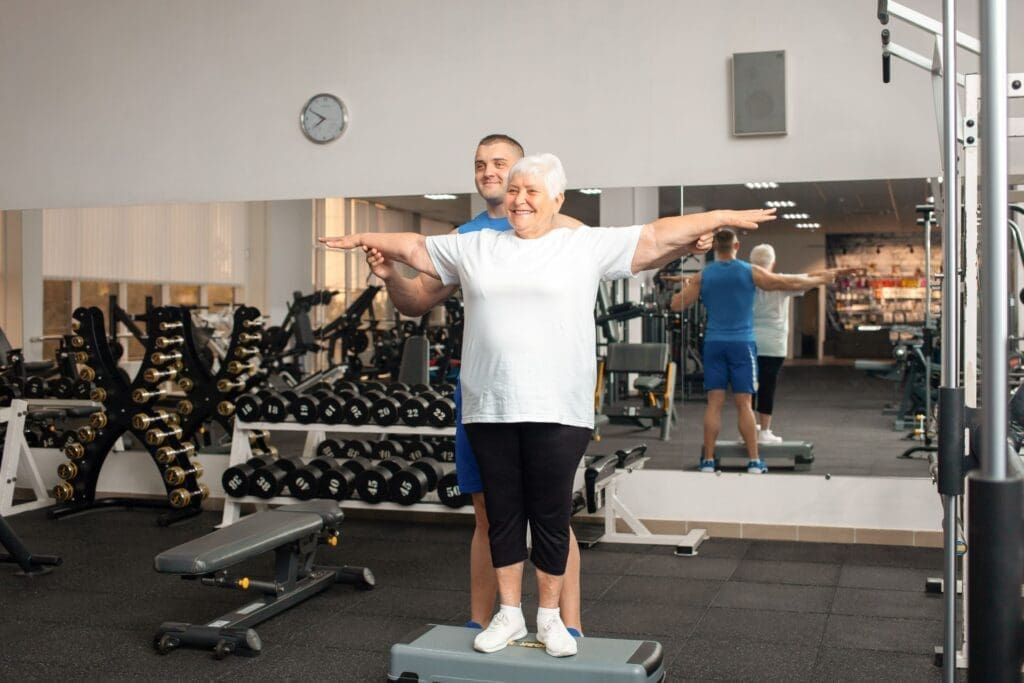
4. Stay Upright (Balance)
Falls are the number one cause of injury for seniors. Good balance isn’t luck; it’s a skill you can practice.
- What to do: Tai Chi is the gold standard here. Even standing on one foot while you brush your teeth makes a difference.
- Why: Coordination fades if you don’t use it. Training your brain to know where your body is in space prevents broken hips.
Make It Fit Your Life
Cookie-cutter programs don’t work because everyone’s starting line is different.
If you have arthritis, pounding the pavement on a run is a terrible idea. Get in a pool. The water takes the weight off your joints while providing resistance. If you have trouble with memory or focus, look for rhythm-based activities. Dancing isn’t just physical; memorizing steps to music fires up neural pathways in the brain.
The best exercise is the one you actually do. If you hate the gym, don’t go. Join a walking club. Play pickleball. Dig in the garden. If it feels like a chore, you’ll quit. If it feels like hanging out with friends, you’ll show up.
The Social Factor
Isolation is just as dangerous as smoking. Group classes kill two birds with one stone. You get your workout in, but you also get out of the house and talk to people. Whether it’s a walking group or a water aerobics class, the accountability of having friends waiting for you is powerful motivation.
Fuel and Focus
You can’t out-train a bad diet, especially when your metabolism slows down. Focus on nutrient-dense foods—lean proteins, leafy greens, and whole grains. Your body needs raw materials to repair muscle after a workout.
Don’t ignore the stress component, either. High cortisol levels wreck your sleep and your heart health. Meditation, deep breathing, or just sitting quietly in nature aren’t “woo-woo” nonsense. They are physiological tools to lower your heart rate and calm your nervous system.
Where to Start
You don’t have to figure this out alone.
- SilverSneakers: A massive program included with many Medicare plans that gives you access to gyms and classes.
- Community Centers: Check your local rec center. They almost always have senior-specific programming.
- Online Resources: AARP has tons of free content, and YouTube is full of “chair yoga” or “senior cardio” videos you can do in your living room.
Getting older is mandatory, but getting weak is optional. Start small. Walk to the mailbox and back. Do five sit-to-stands from your favorite chair. Just move. Your future self is counting on you to keep the engine running.
Thanks for stopping by!
We’d love to know what you think. Drop a comment below with your feedback or suggestions—we can’t wait to hear from you.
– Best, Stable Grace Staff Writers & Editors