
Anxiety Mapping with Crayons — Draw Your Hotspots
I once drew a panic attack. Not a metaphor — actual scribbles, a pulsing red circle on cheap printer paper. The noise in my chest had a shape and, surprise, a smell: old pennies and burnt toast. I sat there with a box of crayons and decided to treat the ache like a map. That stupid, childish ritual gave me two things: a way to point to the pain, and permission to burn the paper later. If you want a concrete, messy method to locate anxiety and practice small acts of release, this is my version.
What you need and why I pick crayons
I don’t want your anxiety mapping practice to turn into a shopping trip. If you need a special notebook, a $40 pen, and “the right vibe,” you’ll bail. I’ve done it. Low-cost materials make people actually try the exercise, and trying matters more than aesthetics.
Materials (cheap on purpose)
- Plain paper (printer paper is fine)
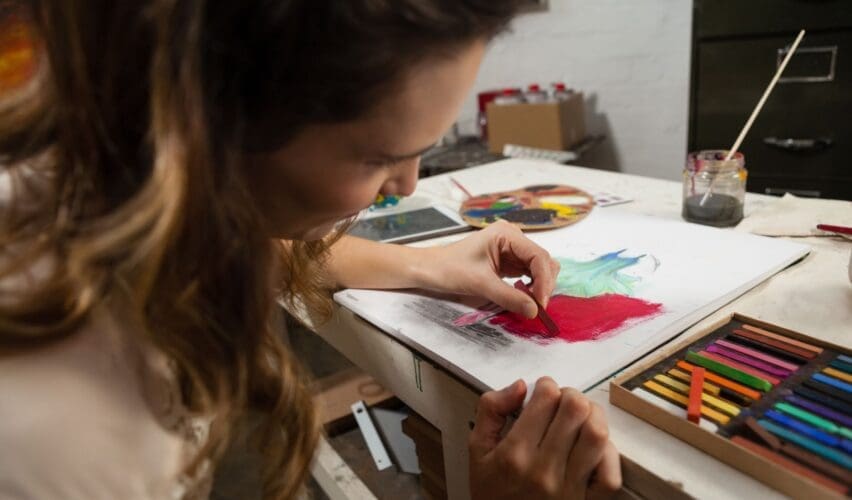
- A cheap box of crayons (the kind kids lose under couches)
- A lighter or candle
- A metal bowl for ashes (not plastic, not paper, not “probably fine”)
- A timer (phone timer works)
- Water nearby (a mug, a bowl, whatever—just there)
That’s it. Household stuff. No barrier, no excuses, no “I’ll start when I’m ready.”
Why crayons work for crayon therapy
I pick crayons because they’re tactile and a little stubborn. They drag. They squeak. They make your hand do something real, which is the whole point of grounding techniques when your brain is sprinting laps at 2 a.m.
Crayons also refuse to look precious. Marker ink can feel permanent. Pens feel like a contract. Crayons look like a messy draft, which gives you permission to be honest. You can press hard for rage, shade lightly for dread, scribble for static. No one’s grading your “anxiety mapping” map.
And they’re forgiving. Hate the color? Layer over it. Want to change a hotspot? Smear it. Crayons don’t argue.
Keep it short so you don’t spiral
I set a timer and keep each hotspot to 1–2 minutes. Short, focused actions reduce overwhelm for anxious adults. Pick 3–5 hotspots max for the first session. Any more and it turns into a full-body inventory of doom.
Safety rules for the burn ritual (small, controlled)
Clear rules stop the “what if I mess up?” avoidance.
- Burn only a corner of the paper, over the metal bowl.
- Keep water within arm’s reach.
- Don’t do this near curtains, papers, or your “I’ll just hold it” optimism.
Owning our story can be hard but not nearly as difficult as spending our lives running from it. — Brené Brown
How to draw emotional hotspots (step-by-step)
I don’t start with deep breathing. I start with crayons. Because my brain will write a novel about anxiety if I let it, and I’m not giving it that kind of airtime.
Step 1: Pick your map
Grab paper. Choose one:
- Body outline (stick figure is fine)
- Blank square (for “I can’t even locate it” days)
Set a timer for 30–90 seconds. Short tasks keep me from spiraling into a dramatic memoir.
Step 2: Don’t think. Mark pressure.
Ask one question: Where is it loud? Then mark the spot. Dot, smear, circle, scratch. Whatever matches the feeling.
Sample script (say it out loud if you feel silly): Okay, where is that tightness? Point and name it.
Step 3: Use color like mood language
I stick to 5–7 colors like a tiny emotional paint set. Keep it consistent so your Anxiety mapping doesn’t turn into abstract art class.
- Hot red: panic, heat, “get me out of here”
- Gray: numb, checked out, foggy
- Scribbled black: racing thoughts, doom loops, mental static
- Blue: sadness, drop in energy
- Green: jittery, restless, can’t sit still
Make your own legend if you want. Just don’t overcomplicate it.
Step 4: Label each hotspot with a tiny, concrete tag
This is where the magic is, and also where people mess it up. Concrete labeling links feelings to triggers. Keep labels short so you don’t slide into paragraphs.
Good labels:
- work email
- family dinner
- left knee
- bank app
Bad labels: “my complicated relationship with productivity.” Nope. Too big. Too slippery.
Step 5: Repeat until you have at least three emotional hotspots
Mark 3 hotspots minimum. Over a few sessions, three or more hotspots starts showing patterns: same shoulder before meetings, same stomach before texting your mom, same jaw at bedtime. Annoying. Useful.
Nothing ever goes away until it has taught us what we need to know. — Pema Chödrön
Reading the map: what patterns tell you
Your crayon map will try to lie to you. Mine does. One day it screams “work stress,” the next day it’s all “mystery stomach dread.” That’s why I don’t trust a single drawing. I trust 7 days. Short, repeated mind-body tracking is basic cognitive-behavioral practice for a reason: patterns show up when your memory stops freelancing.
Color clusters = persistent triggers
Scan for the same color showing up in the same body zone across different days. A red throat three times? A gray chest every weekday? That’s not “random.” That’s an emotional hotspot with a schedule.
Example: I kept coloring my jaw in angry orange on Monday, Wednesday, Friday. Cute. Turns out those were my recurring meeting days. My body was basically sending calendar invites.
Ask sharper questions (not “why am I like this?”)
Once you spot a cluster, interrogate it like a nosy detective, not a judge. I use these:
- When did this start? (first day this color appeared)
- What happened right before? (email, call, commute, coffee, scrolling)
- Who else was there? (boss, partner, stranger on the train, my own inner critic)
Then add 1 sentence per hotspot under the map. Context sentences make later review faster and way more useful. “Red chest after 2pm latte + rushed deadline” beats “felt bad.”
“The attempt to avoid pain creates more pain. Noticing is different from denying.” — adapted from Gabor Maté
Turn hotspots into micro experiments (change one variable)
Don’t go full life overhaul. Pick 3 micro experiments, one per week, and redraw next week. Keep it boring. Boring works.
- Caffeine swap: half-caf after noon; track chest/neck colors.
- Meeting buffer: 3-minute grounding techniques reset (feet on floor, slow exhale) before the call.
- Context tweak: same task, different location (kitchen table vs. bed) and see if the stomach hotspot moves.
If the color fades, you’ve got cause-and-effect. If it doesn’t, good. Now you’re not guessing—you’re testing.

Burn the map: ritual, safety, and meaning
I’m going to say the quiet part out loud: burning a crayon anxiety map feels a little ridiculous… and that’s why it works. Anxiety loves to act like it owns the room. A small, controlled burn ritual for anxiety flips the script. I’m not “fixing” anything. I’m drawing a line. Symbolic closure, with ash.
Small rituals can mark a boundary between what was and what comes next. — Esther Perel
Why burn it (and why it doesn’t need to be dramatic)
The point isn’t flames licking the ceiling like a movie scene. Controlled ash is fine. The research-y takeaway: a small, repeatable ritual increases perceived agency. My brain hears, “We’re done with this for now.” That’s the whole trick.
Safety checklist (so this doesn’t become new anxiety)
Keep it boring. Boring is safe. Safe is the goal.
- One sheet at a time. No wadded paper balls. No “let’s do the whole notebook.”
- Use a metal bowl or sink. Not a ceramic plate you “think is fine.”
- Have water on hand (a full glass or small bowl). Not “nearby somewhere.”
- Ventilated area. Open window, fan on. Crayon wax smells… intense.
- Keep hair, sleeves, and pets away. Cats love chaos.
- Stop if you feel shaky, dizzy, or impulsive. Switch to a zero-risk option.
How I do it (quick, controlled)
- Set the bowl down on a stable surface.
- Light one corner. Let it catch. Drop it in the bowl.
- Watch until it’s out. Stir the ash with something non-flammable if needed.
- Douse with water. Wait. Then toss.
Zero-fire alternatives (still counts)
Fire isn’t accessible for everyone, and for some cultures it carries heavy meaning. Respect that. The action matters more than the method:
- Shred it into thin strips.
- Photograph it, then delete the image (yes, empty the trash).
- Tear it slowly while naming three grounding techniques: feet on floor, cold water on wrists, five slow breaths.
Aftercare (5 minutes, no heroics)
Do 5 minutes of breathing, drink a glass of water, then take a short walk. Call it a DIY therapy exercise if you want. I call it cleanup.
Keeping score: log, reflect, repeat
I don’t trust my memory when I’m anxious. My brain rewrites the past like a sloppy editor with a grudge. So I keep score. Not in a “gold star” way. In a “what actually happened?” way. That’s mind-body tracking at its best: boring, consistent, and weirdly comforting.
Tracking is just attention with a pen. — James Clear
A tiny log that doesn’t ruin your day
Keep it short. One line means one line. If you start writing a novel, you’ll quit by Thursday. I use the same tone every time—plain, readable, no dramatic flourishes—because consistency beats intensity for behavior change.
| Date | Hotspot color | Label | Trigger guess | 1-line note | Action tried |
|---|---|---|---|---|---|
| 2026-01-07 | Red | Chest | Email ping | “Tight for 10 min, then eased.” | 2-minute walk |
Short, dated notes make retrospective pattern spotting easier. That’s the whole trick. Also: take a photo of each crayon map and drop it into a dated folder. Name it like 2026-01-07_hotspots.jpg. Future-you will thank you for the receipts.
The 7-day check-in (my favorite kind of nosy)
Once a week, I look at the photos like I’m reviewing drafts. Same question every time: did the hotspot shrink, migrate, or disappear? If it moved from my stomach to my jaw, that’s not “random.” That’s a clue. If nothing changes, that’s also a clue. Annoying, but useful.
Prompts I actually answer: “What set it off most often?” “What helped even 5%?” “What did I try that made it worse?” Keep it tight. No over-description. No filler.
When the patterns feel heavy
If your maps start looking like a crime scene every day, don’t white-knuckle it alone. Share selectively—with a therapist, or one trusted friend who won’t hit you with cheesy advice. Private work can turn into support when you bring the right person into the room. Want to try a 7-day run and see what your body’s been trying to say?
TL;DR: Map where anxiety lives on your body and calendar using crayons, name triggers, and end with a small, safe burn ritual to close the session.
Thanks for stopping by!
We’d love to know what you think. Drop a comment below with your feedback or suggestions—we can’t wait to hear from you.
– Best, Stable Grace Staff Writers & Editors