Finding Wholeness Thru Living & Minimalism and Subtracting the Unnecessary
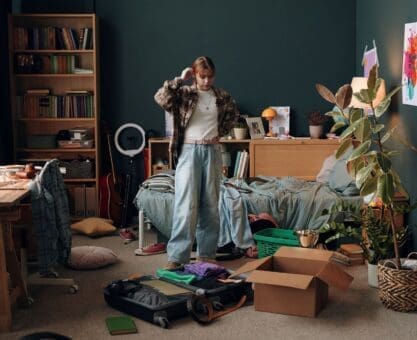
I once spent forty minutes looking for a matching sock, and forcing myself to not get frustrated, while my morning coffee turned into a cold, oily sludge. I had seventy-four pairs of socks. Most had holes. Some were “novelty” gifts from people who don’t actually know me. I sat on the floor of my bedroom, surrounded by lint and polyester, and I felt like I was suffocating. Not because of a lack of oxygen, but because of the sheer volume of crap I had to manage just to leave the house.
Modern life is a pile of obligations disguised as opportunities. We are told to want everything. We are told that “more” is a synonym for “better.” It isn’t. More is just more work. Every object you own is a silent demand for your attention. Every “yes” you say to a Tuesday night happy hour with people you secretly find exhausting is a theft from your own peace.
I’m tired of it. I bet you are too.
The Physical Weight of Your Junk Drawer
We need to talk about the junk drawer. You know the one. It contains three dead AA batteries, a menu for a Thai place that closed in 2019, and a mysterious plastic bracket for an IKEA shelf you threw away during the Obama administration. Why is it still there? Because deciding to throw it away requires a micro-dose of mental energy you don’t think you have.
Minimalism isn’t about owning one white t-shirt and a single succulents. That’s an aesthetic. Real minimalism is a survival strategy. I started by looking at my kitchen counter. I had a bread maker. I haven’t made bread since the Great Sourdough Panic of 2020. It sat there, taking up six square inches of granite, mocking me. I put it on the curb. Someone took it within twenty minutes. My kitchen felt three pounds lighter.
Objects carry ghosts. That sweater your ex gave you? It’s not just wool. It’s a recurring memory of a bad breakup every time you move it to get to your gym clothes. Toss it. The “good” china you’re saving for a dinner party that never happens? Use it for your morning cereal or get rid of it. Storing things “just in case” is just paying rent for trash.
I realized that my house was less of a home and more of a storage unit I happened to sleep in. When I started dragging bags to the donation center, I didn’t feel a sense of loss. I felt a sense of space. Space to breathe. Space to exist without being reminded of all the things I hadn’t used, fixed, or cleaned.
The Digital Red Dot of Doom
Your phone is a slot machine. Every time you see that little red bubble on an app icon, your brain gets a tiny hit of cortisol. It’s a “notification.” A notification of what? Usually, it’s a LinkedIn update about someone you haven’t spoken to in a decade getting a promotion to “Regional Vice President of Solutions.”
I deleted eighty percent of my apps. I turned off every single notification except for phone calls and text messages from people I actually like. The silence was deafening at first. Then, it was glorious.
The internet wants you to be everywhere at once. It wants you to care about a celebrity feud, a political scandal in a country you can’t find on a map, and a new “must-have” air fryer all in the same thirty-second scroll. This is digital clutter. It clogs your brain. It makes it impossible to focus on the book you’ve been trying to read for six months.
I stopped checking my email after 6:00 PM. The world didn’t end. My boss didn’t fire me. The projects I was working on actually got better because I wasn’t looking at them through a haze of 11:00 PM exhaustion. We treat our brains like infinite hard drives. They aren’t. They are more like RAM. If you have too many windows open, the whole system crashes. Close the windows.
The Cult of “Busy”
If you ask someone how they are, ninety percent of the time they say “Busy.” It’s a status symbol. If you’re busy, you’re important. If you’re busy, you’re needed.
I think being busy is a failure of boundaries.
I used to pride myself on a packed calendar. My Google Calendar looked like a game of Tetris played by a drunk person. I had “syncs,” “check-ins,” and “briefings.” I was exhausted, irritable, and doing mediocre work because I was spread so thin I was practically transparent.
Slow living is the radical idea that you don’t have to maximize every second of your day. You can sit on a chair and look at a tree. You can spend two hours cooking a meal and then eat it without looking at a screen. You can say “I can’t make it” without offering a three-paragraph excuse about your dog’s hypothetical dental surgery.
I started blocking out “Do Nothing” time. At first, I felt guilty. I felt like a lazy parasite. But then I noticed something. When I stopped rushing, I stopped making stupid mistakes. I stopped losing my keys. I stopped snapping at the guy at the grocery store who was taking too long to find the barcode on a dragonfruit.
Subtraction is more powerful than addition. Subtract the toxic obligations. The “friend” who only calls when they need a favor? Stop answering. The committee you joined because you felt bad saying no? Resign. Your time is the only currency that actually matters, and you’re currently handing it out like it’s Monopoly money.
The Toxic Obligation Sieve
We have this weird cultural hang-up about “finishing things.” We finish books we hate. We finish movies that bore us. We stay in jobs that make us want to scream into a pillow every Monday morning.
Why?
Sunk cost fallacy is a hell of a drug. You think because you’ve already spent time or money on something, you have to see it through. No. If the book is bad, put it down. If the party is boring, leave. If the “toxic obligation” is a family member who makes you feel like garbage every time you visit, reduce the visits.
I used to feel a crushing sense of duty to attend every wedding, baby shower, and housewarming party I was invited to. I spent thousands of dollars on gifts for people I barely knew. I realized I was buying their approval with my own stress. I stopped. I sent a nice card and stayed home. My bank account stayed full, and my nervous system stayed calm.
This isn’t about being a hermit. It’s about being intentional. It’s about choosing your tribe instead of letting a Facebook algorithm choose it for you.
The Specificity of Slowing Down
When I talk about slow living, I’m not talking about moving to a farm in Vermont. I live in a city. There are sirens. There is traffic. There is a guy downstairs who plays the drums at 2:00 AM.
Slowing down is a series of small, concrete choices.
It’s choosing to walk to the store instead of driving, even if it takes fifteen minutes longer. It’s the smell of the actual coffee beans before you grind them. It’s the weight of a physical book in your hands instead of the cold glass of a Kindle.
I bought a manual espresso machine. No pods. No buttons. I have to pull a lever. I have to watch the pressure gauge. It takes five minutes to make a cup of coffee. Those five minutes are a sanctuary. I’m not checking my phone. I’m not thinking about my 9:00 AM meeting. I’m just making coffee.
We try to “optimize” our lives to save time, but what do we do with the time we save? We use it to do more “optimized” things. It’s a loop. It’s a treadmill. Get off the treadmill.
The Physical Sensation of Enough
We are conditioned to never feel “enough.” Your car is fine, but the new model has heated cup holders. Your phone is fine, but the new one has a camera that can see the craters on the moon.
I look at my things now and ask: “Does this help me live the life I want, or is it just another thing I have to dust?”
Most of the time, it’s just something to dust.
I went through my closet and realized I wore the same three pairs of jeans and five t-shirts. Everything else was “ego” clothing. Clothes for a version of me that goes to fancy galas or goes hiking in the Alps. I don’t go to galas. I hate hiking. I gave the gear away.
Subtracting the unnecessary isn’t about deprivation. It’s about clarity. When you clear the clutter—physical, digital, and social—the things that remain start to glow. You actually appreciate the sweater you kept. You actually enjoy the conversation with the friend you chose to see.
I stopped trying to “unleash” my potential or “unlock” my best life. I just started living my actual life. It’s smaller. It’s quieter. It’s significantly less impressive to strangers on Instagram.
But I’m not looking for socks anymore.
Are you still holding onto that bread maker?
Thanks for stopping by!
We’d love to know what you think. Drop a comment below with your feedback or suggestions—we can’t wait to hear from you.
– Best, Stable Grace Staff Writers & Editors