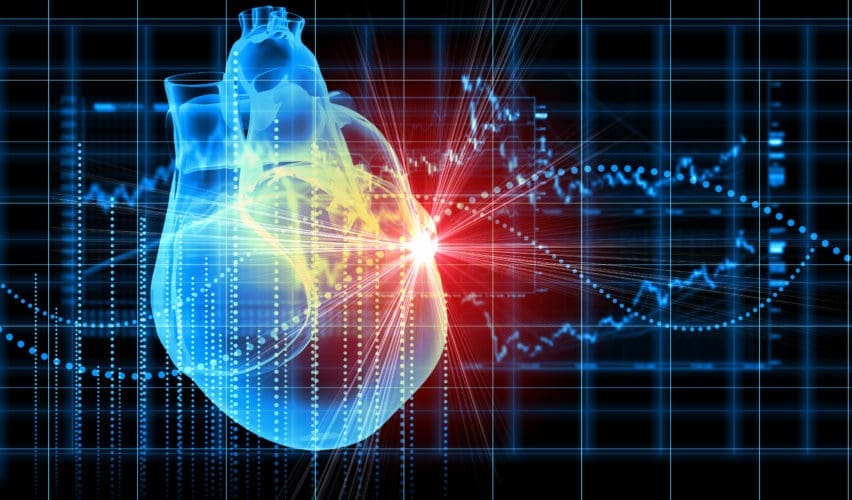
The Heart’s Intelligence: Your Second Brain
Your Ribcage is Hiding a Second Brain and It’s Smarter Than Your Spreadsheet
Forty thousand. That is the number of sensory neurons currently firing away inside your chest, and they aren’t just pumping blood. I’m talking about a sophisticated network of neurites that can sense, feel, learn, and remember. Scientists call it the intrinsic cardiac nervous system. I call it the reason you shouldn’t have ignored that weird, twisting feeling you got before signing that terrible apartment lease three years ago. We’ve been lied to for centuries. Schoolbooks told us the heart was a simple muscle, a biological pump that moves red liquid around like a glorified sump pump in a wet basement. It turns out that’s total nonsense. Your heart is a sensory organ, a sophisticated information processing center that talks back to your brain more than your brain talks to it.
I’ve spent too much time looking at the data to believe in the “pump” myth anymore. This isn’t about greeting card sentiment or some vague “follow your heart” platitude you’d find on a dusty throw pillow. This is hard biology. The heart sends more signals to the brain via the vagus nerve and the spinal column than the brain ever sends downstairs. It’s a literal conversation. Sometimes it’s a shouting match. When you feel that sudden thud of dread when a specific name pops up on your iPhone screen—the one with the cracked glass and the battery that dies at thirty percent—that isn’t your imagination. That is your cardiac brain processing environmental data faster than your neocortex can even start to blink.
The Neurons You Can’t Think With
The discovery of these neurons in 1991 changed everything, though most people are still stuck in the seventeenth century thinking like René Descartes. Dr. J. Andrew Armour was the one who really blew the lid off this. He showed that the heart has its own functional brain. It can act independently of the cranial brain. It can learn. It remembers. If you’ve ever had a heart transplant, there are documented cases where the recipient starts craving the donor’s favorite beer or suddenly hates the smell of lilies. That’s cellular memory sitting right there in the tissue. I find it hilarious that we spend so much money on “brain-boosting” supplements while ignoring the fleshy supercomputer sitting behind our sternums.
Most of my frustration with modern medicine comes from this siloed approach. We treat the head like the CEO and the heart like a lowly intern who just fetches coffee. In reality, the heart is the one setting the tone for the entire company. It produces the body’s most powerful electromagnetic field. You can measure this field several feet away from the body with a SQUID magnetometer. If I’m standing near you and I’m radiating pure, unadulterated irritation because you’re chewing your gum like a cow, your heart is actually picking up that electromagnetic frequency. We are literally broadcasting our internal states to everyone in the elevator.
Why Your Spreadsheet is Lying to You
I love a good Excel sheet. I love the rows, the columns, and the way the “SUM” function makes me feel like I have control over my life. But logic is a slow, clunky tool. It’s like trying to run a high-end video game on an old Windows 95 machine with a floppy disk drive. Purely logical decision-making is actually a sign of brain damage. Neurologist Antonio Damasio studied people who had damage to the parts of the brain that integrate emotions and physical sensations. These people were geniuses on paper. Their IQs were off the charts. Yet, they couldn’t decide what to eat for lunch. They would spend two hours weighing the pros and cons of turkey versus ham. They lacked “somatic markers”—those physical “gut” or “heart” feelings that tell us what matters.
Without your heart’s input, you’re just a malfunctioning calculator. Intuition is the heart’s way of bypassing the slow, agonizing process of logical deduction. It’s a pattern recognition system on steroids. It looks at the subtle tilt of a person’s head, the faint smell of ozone in the air, or the specific way a room goes quiet, and it sends a signal. Boom. Decision made. You call it a “hunch.” I call it the cardiac nervous system doing the heavy lifting while your brain is still trying to figure out where it left its keys.
The Science of Choosing a Spouse or a Stock
Think about the last time you made a big mistake. I’m talking about a “why did I buy this car?” or “why am I dating this person who collects cursed dolls?” kind of mistake. You probably had a physical sensation in your chest before you made the choice. Maybe it was a tightness, a dull ache, or a flutter that didn’t feel like excitement. You ignored it. You looked at the data. The car had great gas mileage. The doll collector had a steady job and a nice smile. You let your logic override your cardiac intelligence. I’ve done it a dozen times. Every single time, the heart was right and the spreadsheet was wrong.
This isn’t just anecdotal. Researchers have done studies where participants played a gambling game. Their heart rates would change and their skin would start to sweat before they picked a losing card, long before their conscious brain realized the deck was rigged. The body knew. The heart was already sending the “danger” signal while the brain was still thinking about the snacks on the table. We are wired for intuitive foresight. It’s a survival mechanism that’s been polished by millions of years of evolution, yet we’ve been conditioned to think it’s just “woo-woo” nonsense.
The Vagus Nerve: A Data Highway for the Anxious
If the heart is the sender, the vagus nerve is the fiber-optic cable. This nerve is the longest in the body, wandering from the brainstem all the way down to the abdomen. It’s the primary channel for the parasympathetic nervous system. When you take a deep, slow breath—the kind that smells like rain on hot asphalt or fresh pine—you are manually stimulating your vagus nerve. You are telling your heart brain to settle down.
I’m obsessed with Heart Rate Variability or HRV. It’s the measure of the time interval between heartbeats. You don’t want a heart that beats like a metronome. That’s a sign of a system under stress, ready to snap. You want a heart that is flexible, one that speeds up and slows down with every breath. High HRV is linked to better decision-making, emotional stability, and the ability to not scream when someone cuts you off in traffic. People spend thousands on Oura rings and Whoop straps just to track this one metric. We are finally using tech to validate what ancient cultures knew: the rhythm of your heart dictates the quality of your thoughts.
Hacking Your Chest Without Using Crystals
You don’t need to go to a retreat in Sedona to use this. You just need to stop being so loud in your own head. I find that the best way to access heart intelligence is to get specific. When I’m faced with a choice, I don’t ask “what should I do?” I ask “how does this feel in my chest?” I literally shift my attention away from the frantic, buzzing energy of my forehead and move it down. It sounds simple. It is simple. But it’s incredibly hard because we are addicted to the “noise” of thinking.
I’ve noticed that when I’m in “coherence”—a state where the heart and brain are in sync—my typing gets faster. My internal monologue stops being a jerk. The coffee tastes better. This state isn’t some mystical trance. It’s a physiological reality. You can reach it by focusing on your heart and breathing in a rhythm of five seconds in and five seconds out. Do it for two minutes. You’ll feel the shift. It’s like the static on an old radio suddenly clearing up to reveal a crystal-clear signal. No sage required. No chanting. Just biology.

The Physical Toll of a Broken Heart
We use the term “broken heart” like it’s a metaphor. It isn’t. Takotsubo cardiomyopathy is a real medical condition where extreme emotional stress causes the left ventricle of the heart to balloon out and weaken. It literally changes shape. You can die from a broken heart. The physical structure of your organ reacts to the loss of a social connection. This is because the heart is deeply tied to our sense of safety and belonging. It’s the center of our social engagement system.
I get angry when people dismiss “emotional” issues as being “all in your head.” They aren’t in your head. They are in your chest. They are in your blood pressure. They are in the way your cardiac neurites are processing the trauma of a breakup or a job loss. When you feel “heavy-hearted,” that weight is real. Your heart is struggling to maintain its rhythm in a sea of stress hormones like cortisol and adrenaline. Adrenaline smells like metallic pennies and feels like a jittery electric current under the skin. Your heart has to process all of that.
Why We Are Disconnected
We live in a world designed to keep us in our heads. We stare at glowing rectangles that emit blue light and keep our brains in a state of constant, low-level panic. We receive notifications that vibrate against our thighs with the frequency of a hornet’s nest. Everything is designed to pull us away from the quiet, steady intelligence of the heart. We are a society of floating heads, disconnected from the very organ that makes us human.
I see it in the way people talk. They use words like “leverage” and “optimize” and “circle back.” Those are brain words. They are cold. They are mechanical. You never hear someone say “my heart feels like it’s expanding” in a corporate meeting. Why not? It’s a more accurate description of a successful collaboration than “synergy.” We’ve sterilized our language to match our sterile, head-centered lives. I think that’s why everyone is so miserable. We are ignoring forty thousand neurons that are trying to tell us that something is wrong.
The Future of the Cardiac Brain
There is a growing field of neurocardiology that is finally getting the respect it deserves. We are seeing trials where heart-centered breathing is used to treat PTSD in veterans. We are seeing athletes use HRV training to reach “the zone” more consistently. It’s an exciting time, but it’s also a bit sad that we needed machines to tell us to listen to ourselves. I hope we reach a point where we don’t need a sensor on our wrists to tell us when we are stressed.
Your heart is currently sending a massive amount of information to your brain. As you read these words, your cardiac brain is deciding whether this information is useful or threatening. It’s checking your internal state against the external world. It’s a 24/7 operation that never takes a coffee break. The least you could do is acknowledge its existence. Stop treating your chest like a hollow cavity and start treating it like the command center it actually is.
What if you spent tomorrow making every small choice based on that “thud” or “flutter” instead of your to-do list? Would you still go to that happy hour with people you don’t actually like? Would you still buy that overpriced sandwich that tastes like damp cardboard? Probably not. You’d probably find yourself living a life that actually fits you, rather than one that just looks good on paper. Are you brave enough to let the muscle in your chest take the wheel for a day, or are you too afraid of what it might tell you?
Thanks for stopping by!
We’d love to know what you think. Drop a comment below with your feedback or suggestions—we can’t wait to hear from you.
Wishing You The Best, Stable Grace Staff Writers & Editors
Ready to unlock your full potential? Discover a curated world of wisdom and transformative strategies in our bookstore. Explore the Collection