

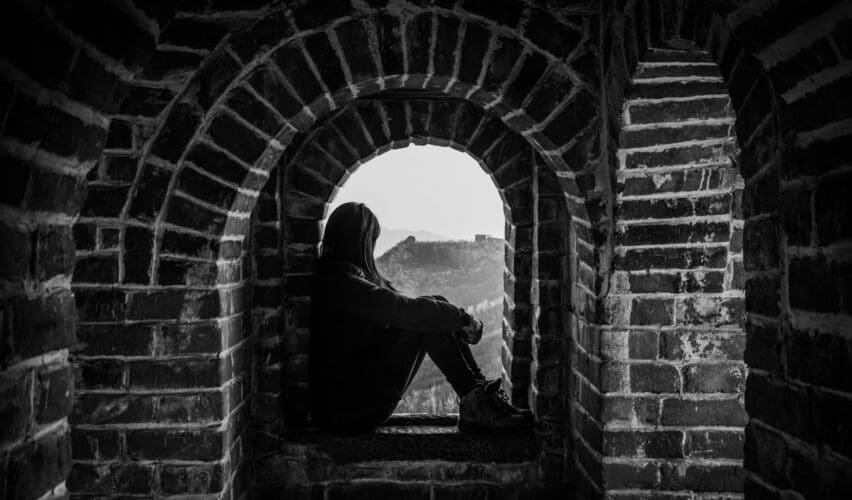
The Loneliness Cure Isn’t an App—It’s a ‘Third Place’
I spent last Tuesday staring at a flickering neon sign in a half-empty laundromat, wondering when, exactly, we all decided to stop hanging out. The air smelled of industrial-grade lavender and hot lint. A man in the corner was folding towels with a rhythmic, angry intensity. We didn’t speak. We barely looked at each other. But for forty-five minutes, that laundromat was the only place I existed outside of my apartment or my laptop screen.
It was my accidental third place. It was miserable.
We are currently living through a social famine. You’ve felt it. It’s that low-grade hum of anxiety that settles in around 7 PM when the work emails stop and the infinite scroll begins. We were promised the “global village” by the early internet pioneers, but all we got was a digital panopticon where we watch other people pretend to have fun. The physical world? It’s shrinking.
The mall is a ghost town of boarded-up Claire’s and echoing food courts. The church, for many of us, is a relic of a different generation. Even the neighborhood “dive” bar has been rebranded into a $18-per-cocktail “mixology lab” where the music is too loud to hear your own thoughts, let alone a stranger’s name.
We lost the infrastructure of belonging. Now, we’re trying to buy it back through subscription apps and “community” platforms that just want our data. It’s not working. You can’t download a sense of home.
The Mall is Dead and Your Living Room is a Cage
Ray Oldenburg, the urban sociologist who coined the term “third place” in the late 80s, argued that for a society to be healthy, humans need three distinct zones. The first is the home. The second is work. The third is the “great good place”—the neutral ground where you go to hang out, shoot the breeze, and exist without a specific agenda.
The third place used to be easy to find. It was the barber shop. The local pub. The town square. The stoop. It was where you learned the news that wasn’t “Newsworthy” but was vital—who was sick, who got a new job, whose dog finally learned to sit.
Now? We’ve optimized those spaces out of existence. We “leverage” our time for “productivity.” We order groceries on an app so we don’t have to see the cashier. We work from home so we don’t have to see our coworkers. Then we wonder why we feel like we’re vibrating with loneliness.
My living room is nice. I have a weighted blanket and a 4K TV. But after three days of working from that same couch, it stops feeling like a sanctuary. It feels like a cell. The walls start to look like they’re leaning in. I need a place where I don’t have to be a “Productive Employee” or a “Responsible Homeowner.” I just need to be a guy in a room.
Why Your Discord Server Doesn’t Count
I hear this a lot: “But I have a Discord! I have a group chat!”
I love my group chats. They are the lifeline that keeps me sane during the workday. But a digital space is a two-dimensional substitute for a three-dimensional need. You can’t smell a Discord server. You can’t feel the temperature of the room change when someone new walks in. You can’t have a “serendipitous encounter” on a platform designed by algorithms to keep you in an echo chamber.
Digital spaces are “frictionless.” That sounds good in a tech pitch, but human connection requires friction. It requires the awkwardness of a physical body in a physical space. It requires the chance of meeting someone you didn’t “follow” or “subscribe” to. Without that friction, we aren’t building community. We’re just performing for an audience of pixels.
Hunting for the “No-Fee” Social Life
The biggest hurdle to finding a third place today is the “pay-to-play” model of modern existence. Most “public” spaces are actually private businesses. If you want to sit there, you have to buy something.
“I feel like I’m constantly being evicted from the world,” a friend told me recently. She’s right. If you sit in a coffee shop for more than ninety minutes without ordering a second $7 oat milk latte, the staff starts giving you the “it’s time to go” eyes. The park is great, but it rains three months out of the year where I live. Libraries are the last true bastion of the “free” third place, and we should be protecting them like they’re made of gold.
But since we can’t all live in the library, we’ve had to get creative. We are seeing a resurgence of secular third places that prioritize activity over commerce.
The Run Club Renaissance (And Its Scent)
Go to any city park on a Saturday morning and you’ll see them: fifty people in expensive spandex, huffing and puffing in a giant pack. Run clubs are the new churches.
They have a low barrier to entry. You just show up. They have a shared struggle (running is hard). And they have a “fourth place” component—the post-run coffee or beer where the actual bonding happens.
I joined one last year. I’m not a good runner. I’m the guy at the back who looks like he’s having a minor cardiac event. But the club doesn’t care. There’s something primal about moving in a pack. The smell of damp asphalt, the collective sound of sneakers hitting the ground, the shared relief when the hill ends. It’s physical. It’s real. It’s a place where I’m known as “the guy with the slow pace and the weird socks,” and honestly, that’s enough.
Pottery Studios and the Magic of Getting Muddy
Another weirdly specific trend: pottery. I went to a studio three weeks ago. It was tucked into a basement behind a dry cleaner. The air was thick with the scent of wet earth and kiln fire.
The fascinating thing about a pottery studio as a third place is that you can’t look at your phone. Your hands are covered in gray sludge. If you touch your screen, you’ll ruin a $1,200 device. So, you talk. You talk to the woman at the next wheel who is struggling with her vase. You talk to the instructor about why the clay keeps collapsing.
It’s a “slow” third place. You can’t rush it. You have to wait for the clay to dry, for the bisque fire, for the glaze. This forced patience creates a different kind of social bond. You see the same people week after week, all covered in the same mud. It’s hard to be pretentious when you’ve just accidentally turned a bowl into a lumpy pancake.

How to Build Your Own if the Neighborhood is a Ghost Town
Maybe you live in a suburb where the only “public” space is a Target parking lot. Or maybe you’re in a city where everything is too expensive. You might have to build the thing yourself.
I’m not talking about starting a non-profit. I’m talking about “The Unspoken Contract.”
A third place is defined by its regulars. It’s defined by the people who show up when they don’t have to. You can turn a boring park bench into a third place if you and three neighbors decide to sit there every Thursday at 6 PM with a thermos of tea.
Here is how you actually do it:
- Pick a consistent time and place. Frequency is more important than the “vibes” of the location.
- Make it visible. If you’re at a park, don’t hide. Sit where people walk by.
- The “Open Chair” Rule. Always have space for someone else to join.
- Lower the stakes. It shouldn’t be a “Meeting.” It should be a “Hang.” No agenda. No PowerPoint.
I’ve seen this work with “Stoop Nights.” One guy in a Brooklyn neighborhood just started sitting on his front steps with a cooler of sparkling water every Friday. After a month, two neighbors joined. After six months, it was a block party. It cost zero dollars. It required zero apps. It just required someone to be physically present in the world.
The Cost of Existing for Free
We have to fight for the right to exist in public without spending money. Urban planners call this “hostile architecture”—the benches with bars in the middle to prevent lying down, the lack of public restrooms, the removal of trees. It’s all designed to keep us moving, keep us consuming, and keep us isolated.
“The loss of the third place is a loss of our sense of civic duty,” says urban historian Dr. Marcus Thorne. “When we only interact with people we’ve ‘chosen’ online, we lose the ability to tolerate the person who is different from us. The third place is where you learn how to be a neighbor.”
I think about the man in the laundromat. If I had been braver, I would have asked him about his day. Maybe he was a jerk. Maybe he was the funniest guy in the city. I’ll never know because I stayed in my digital shell.
Don’t do that. Find your version of the run club, the library, or the muddy basement pottery studio. Find a place where the barista knows your name not because it’s printed on a sticker, but because you’ve sat in the same corner every Tuesday for a year.
Our loneliness isn’t a personal failure. It’s a design flaw in the modern world. The only way to fix a design flaw is to build something better. Go outside. Sit down. Stay a while. The world is waiting for you to show up.