

Transform Your Life Embrace Your Grace
My left eyelid wouldn’t stop twitching. It was a rhythmic, frantic little dance that started every time I looked at the charging cable for my laptop. I sat there, staring at a half-eaten bagel that had gone cold enough to feel like a hockey puck, wondering when the “transformation” I’d been promised in three different self-help podcasts was actually going to show up. Everyone talks about personal growth like it is a shiny, new coat of paint you slap over your existing mess. They make it sound like you just need to wake up at 4:00 AM, drink salt water, and suddenly you are a Greek god of productivity. That is a lie. Real change is a sweaty, unglamorous process that usually involves more frustration than enlightenment. We spend our lives looking for a shortcut to a version of ourselves that doesn’t exist. We want the result without the friction.
Grace is a word that has been hijacked by wedding planners and religious brochures. Most people think it means moving like a ballerina or never raising your voice when your kid spills grape juice on the white linen sofa. I think grace is actually the ability to look at your own failures without wanting to throw yourself into a woodchipper. It is a functional skill. It is the buffer between a bad day and a total mental collapse. When you are trying to change your life, you are essentially trying to rewrite the operating system of a machine that has been running on the same buggy software for thirty years. Your brain likes your current ruts. It feels safe in the ditch. Trying to crawl out of that ditch is where the actual work happens.
I spent six months trying to optimize every second of my day. I downloaded apps that tracked my deep sleep, my water intake, and how many times I blinked during a Zoom call. I had a dashboard. I had charts. I was the CEO of my own exhaustion. One morning, the app told me I had 84% readiness for the day, but I felt like I had been hit by a truck carrying other smaller trucks. The metrics didn’t match the reality of my bones. That is the problem with the modern self-improvement industry. It treats humans like hardware. It forgets that we are meat and electricity and weird memories of third-grade embarrassments. You cannot optimize a soul with a subscription service.
Sustainable habits are built in the margins. You don’t change your life by moving mountains; you change it by moving one specific, annoying pebble every single morning until the path is clear. I started small. I decided to stop checking my phone the second my eyes opened. That red notification bubble on the email icon is a poison. It sets your heart rate to “panic” before you have even put on socks. For three days, I succeeded. On the fourth day, I failed and spent forty minutes scrolling through videos of people power-washing their driveways. I felt like a failure. Then I remembered the grace thing. I put the phone down and moved on. I didn’t let the mistake ruin the next four hours. That is the secret. The failure is the data, not the verdict.
Emotional intelligence isn’t about being “nice.” It is about knowing why you want to scream at the person in front of you who is taking too long to choose a muffin at the coffee shop. It is recognizing that your anger is actually just tired legs and a lack of protein. When we talk about how to change your life, we usually focus on the external. We want better jobs, better bodies, better partners. We rarely talk about better internal filters. If your filter is clogged with resentment and old grievances, even the best external life will taste like ash. You have to clean the pipes. You have to admit that you are often the one standing in your own way.
Most adults are just children with mortgages and better vocabularies. We are all still seeking some form of permission to be okay with ourselves. We look for it in the “likes” on a photo or the performance review from a boss who doesn’t even know our middle name. This external validation is a treadmill. You can run on it forever and never actually arrive anywhere. True transformation starts when you stop looking for the exit sign and start looking at the floor you are standing on. What can you do right now? Can you drink a glass of water? Can you apologize for being a jerk yesterday? Can you sit in silence for five minutes without trying to “manifest” a private jet?
The smell of burnt coffee in a fluorescent-lit office is a universal sign of a dying spirit. I used to sit in those chairs, watching the clock hands crawl like injured insects. I was waiting for something to happen to me. I thought growth was a destination. I thought one day I would “arrive” at a place where I was finally settled. That place is a myth. Life is a series of adjustments. It is a constant recalibration. If you are waiting for the day when everything is perfect to start living, you are already dead. You have to find the grace in the mess. You have to learn to love the process of being a work in progress.
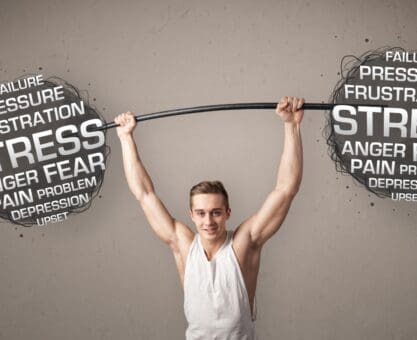
I think about the physical sensation of stress often. It is a tightening in the jaw. It is a shallow breath that stays in the top of the chest. It is a clenching of the fists under the desk. We carry our history in our muscles. When people say they want to “embrace their grace,” they should start by relaxing their shoulders. You can’t think your way out of a body that feels like a coiled spring. You have to move. You have to breathe. You have to acknowledge that your nervous system is doing its best to protect you from tigers that don’t exist anymore. Your brain thinks that a snarky comment from a coworker is a lethal threat. It isn’t. You are safe. You are just annoyed. Distinguishing between those two things is a massive step toward sanity.
We live in a culture that fetishizes “the grind.” We are told that if we aren’t suffering, we aren’t working hard enough. This is a recipe for burnout and a very expensive therapy bill. I’ve seen people brag about how little sleep they get like it’s a badge of honor. It isn’t. It is a symptom of poor time management and a lack of self-respect. You are not a machine. You are a biological entity that requires rest, sunlight, and the occasional carbohydrate. Transformation doesn’t come from deprivation. It comes from alignment. It comes from making choices that actually support the person you want to become, rather than the person you think you should be to impress strangers.
I met a woman once who had lost everything in a business deal. She was sixty and starting over. She didn’t have a “vision board.” She didn’t have a mantra. She just had a very clean kitchen and a habit of walking three miles every morning. She told me that she stopped trying to “fix” her life and started trying to “inhabit” it. That stayed with me. We spend so much time trying to fix our flaws that we forget to actually live in the space we have. Your flaws are probably never going away. You just learn to build around them. You learn to make them less noisy.
Productivity is a trap if it doesn’t lead to peace. What is the point of being the most efficient person in the room if you are also the most miserable? I used to pride myself on my “to-do” list. I would cross off thirty items a day. I was a machine. I was also a ghost. I wasn’t present for any of it. I was just rushing to the next checkbox. Now, I try to do fewer things but do them with more attention. I try to notice the texture of the paper I’m writing on. I try to hear the actual words people are saying instead of just waiting for my turn to speak. This is much harder than being productive. It requires a level of focus that our phones have tried to kill.
The world is loud. It is a constant scream of “look at me” and “buy this” and “be better.” Finding your own voice in that noise is a revolutionary act. It requires you to be comfortable with being bored. It requires you to sit with your own thoughts without an interface to distract you. Most people would rather be shocked with electricity than sit in a room alone with their thoughts for ten minutes. I read a study about that. It’s true. We are terrified of what we might find if we stop moving. But that is where the grace is. It is in the quiet. It is in the realization that you are enough, even if you didn’t accomplish anything today.
Self-improvement is often just a socially acceptable form of self-hatred. We want to improve because we think we are broken. But what if you aren’t broken? What if you are just unfinished? There is a huge difference between wanting to grow and wanting to be someone else entirely. When you embrace your grace, you accept the starting point. You accept the current weight, the current bank account, the current level of anxiety. You stop fighting the reality of the present. Only then can you actually move forward. You can’t steer a car that isn’t moving.
I started a practice of writing down one specific thing that went right every day. Not a general “I’m grateful for my health” thing. That is lazy. I mean something like, “The guy at the deli gave me an extra slice of cheese” or “I managed to hit the green light on Main Street.” These tiny, granular details are the fabric of a life. They remind you that the world isn’t out to get you. They remind you that there is beauty in the mundane. If you can’t find grace in a slice of cheese, you aren’t going to find it in a million-dollar mansion.
Most advice is just someone else’s autobiography. What worked for me might not work for you. My path involved a lot of cold coffee and failed spreadsheets. Your path might involve gardening or learning to play the drums or finally telling your mother-in-law to mind her own business. There is no template. There is no “one size fits all” for human flourishing. You have to be a detective in your own life. You have to look for the clues. What makes you feel alive? What makes you feel like you are disappearing? Do more of the former and significantly less of the latter.
The idea of “adulting” is a joke we tell to pretend we know what we are doing. No one knows what they are doing. We are all just winging it. Some of us are just better at hiding the panic. Once you realize that everyone else is also terrified and confused, the world becomes much friendlier. You can stop performing. You can stop trying to be the “robust” version of yourself and just be the version that shows up. Grace is the permission to be human in a world that wants you to be a brand.

I stopped reading “life-changing” books a year ago. I realized I was just consuming information to avoid taking action. I was a “growth junkie.” I knew all the theories but practiced none of them. I had a library of wisdom and a life of chaos. I decided to pick one thing and actually do it. I chose “not complaining for twenty-four hours.” I failed within the first twenty minutes when I couldn’t find my keys. I tried again. I failed again. Eventually, I made it three hours. Then six. It changed the way my brain processed frustration. It didn’t “unlock” my potential. It just made me less of a pain to be around.
We are obsessed with “hacks.” We want the “one weird trick” to fix our relationships or our waistlines. There are no hacks. There is only the long, slow process of paying attention. There is only the repetitive work of showing up for yourself even when you don’t feel like it. Grace is what carries you through the days when you don’t show up. It is the kindness you show yourself when you fall off the wagon. It is the understanding that the wagon isn’t even real. You are just a person walking a path. Sometimes you stumble. Sometimes you sit down and refuse to move for a week.
I look at my life now and it isn’t perfect. I still have bills. I still have a weird pain in my lower back if I sit too long. I still get annoyed by people who don’t use their turn signals. But I have more grace. I have more space between the stimulus and the response. I am no longer a slave to my own knee-jerk reactions. I have learned to embrace the grind because the grind is where the friction creates the light. Transformation isn’t a flash of lightning. It is the slow, steady heat of a fire that you have to keep feeding every single day.
What would happen if you stopped trying so hard to be perfect? What if you just decided to be a little more honest about how tired you are? Would the world end? Or would you finally find the space to breathe? The most radical thing you can do in this chaotic, demanding landscape is to simply be kind to yourself while you figure it out. You don’t need a game-changer. You just need a little more patience with the person you see in the mirror. Are you willing to be that person today?