Why Your Ab Routine Is Useless: The Case for Functional Core Training
I watched a guy at the gym yesterday spend forty minutes on a decline bench, curled into a ball, sweating over his eighth set of weighted sit-ups. His neck looked like a strained violin string. His lower back was arched so hard I could have parked a bike under it. He finished his set, stood up, and immediately slumped into a posture that resembled a question mark. He’s looking for a six-pack, but he’s really just building a future relationship with a physical therapist.
Your abs are not meant to crunch. The obsession with the rectus abdominis—that “six-pack” muscle—has led to a collective misunderstanding of how the human torso operates. We treat our midsection like a hinged door that needs to be slammed shut over and over. In reality, the core is a sophisticated stabilization system designed to prevent movement, not just create it. If you want a body that actually works, you need to stop thinking about “abs” and start thinking about your functional core.
The Great Illusion of the Rectus Abdominis
Most people think the core is just the front of the belly. It isn’t. Your core is a 360-degree canister. It runs from your diaphragm down to your pelvic floor. It includes the tiny multifidus muscles along your spine, the massive lats on your back, and the internal and external obliques that wrap around your sides. When you focus solely on crunches, you’re training one small strip of tissue to do a job it was never meant to handle alone.
It’s about bracing. Think about a soda can. When the can is sealed and under pressure, you can stand on it. It’s incredibly strong because of internal tension. Once you pop the tab and empty the liquid, the aluminum crumbles under the slightest weight. Most gym-goers are walking around like empty soda cans. They have no internal pressure. They have no stability. They just have a few superficial muscles that pop out when the lighting is right, while their spine screams for help every time they pick up a heavy grocery bag.
Why Your Spine Hates Your Sit-Ups
Every time you perform a traditional sit-up, you’re grinding your lumbar vertebrae together. You’re pulling your spine into flexion under load. Do that five hundred times a week and you’re basically asking for a disc herniation. I used to be that person. I thought the burn in my stomach meant progress. It didn’t. It just meant I was irritating my hip flexors and wearing down my spinal joints.
The hip flexors are the real culprits in most failed ab routines. These muscles, like the psoas, connect your legs to your lower spine. When you do a leg raise or a sit-up, your hip flexors often take over because your core isn’t strong enough to keep your pelvis neutral. This pulls your lower back forward, creating that painful arch. You think you’re working your lower abs. You’re actually just tightening your hips and wrecking your back. It’s a bad trade.
The Physics of Real Movement
Real life doesn’t happen on a flat bench. You don’t “crunch” when you trip over a curb. You brace. You react. If you’re carrying a heavy suitcase in one hand, your core has to fight to keep you from tipping over. This is called anti-lateral flexion. If someone pushes you from the side, your core fights to keep you from spinning. This is anti-rotation.
Training for these moments is what actually builds a “hard” midsection. If you want a core that looks like it’s made of steel, stop moving so much. Start resisting. Exercises like the Pallof press or the single-arm farmer’s carry are infinitely more effective than a thousand crunches. In a farmer’s carry, you hold a heavy kettlebell in one hand and walk. Your obliques on the opposite side have to fire like crazy to keep you upright. That’s functional. That’s how you build a torso that can handle the world.
The Transverse Abdominis: Your Hidden Weight Belt
Deep beneath the six-pack lies the transverse abdominis (TVA). This is your body’s natural weight belt. It wraps around your organs and attaches to your spine. When it’s active, it creates intra-abdominal pressure. This is the “brace” you feel when you’re about to get punched in the stomach.
Most people have no idea how to turn this muscle on. They breathe into their chest, their shoulders rise, and their belly stays soft. To fix your core, you have to fix your breath. Diaphragmatic breathing is the foundation of everything. If you can’t expand your ribs 360 degrees when you inhale, you’ll never have a truly strong core. You’ll just be a guy with some muscle over a weak foundation. I’ve seen powerlifters with forty-inch waists who have more “core strength” than shredded fitness models because they know how to use their TVA to protect their spine under five hundred pounds of iron.
The Problem With “Ab Days”
The very concept of an “ab day” is a red flag. Your core is involved in every single movement you do. If you’re squatting, your core is working. If you’re doing overhead presses, your core is working. If you’re walking the dog, your core is working.
Isolating the core into a thirty-minute block at the end of a workout is a waste of energy. By then, you’re tired. Your form is sloppy. You’re just going through the motions. Instead, you should integrate core stability into every lift. Stop using the back support on the seated press machine. Stand up. Force your midsection to stabilize the weight. Stop using the machines that lock you into a fixed path. Use free weights that force you to balance. That is how you build a core that lasts.
Dead Bugs and Bird Dogs: The Boring Path to Greatness
If you want to see a gym bro roll his eyes, tell him to do a “Dead Bug.” It looks easy. It looks like physical therapy for seniors. But if you do it correctly—pressing your lower back into the floor so hard that a piece of paper couldn’t slide under it while you slowly move your limbs—it is agonizing.
These “boring” stability exercises are the secret. They teach your brain how to move your arms and legs while keeping your spine rock solid. This is the essence of athletic performance. A golfer doesn’t need a six-pack; he needs the ability to rotate his hips while his core transfers that power to the club without his spine snapping. A runner needs a core that stays stiff so energy isn’t leaked with every stride. If your core is “leaky,” you’re wasting power. You’re slow. You’re prone to injury.
The Aesthetics Fallacy
We’ve been sold a lie that a visible six-pack equals health. It doesn’t. You can have a six-pack and have the structural integrity of a wet noodle. Visible abs are mostly a product of low body fat. You can get them by starving yourself and doing zero exercise. But that won’t help you when you have to lift a heavy box or shovel snow.
Functional training actually creates a different look. It creates a thick, dense appearance. It fills in the “holes” around your waist. It makes you look like an athlete rather than a swimsuit model. I’ll take the dense, useful muscle over the paper-thin aesthetic any day. There is a specific kind of confidence that comes from knowing your back won’t “go out” because you reached for a pen on the floor.

The Anti-Movement Revolution
The future of training is anti-movement. We spent decades trying to figure out how to twist and turn the spine under load. Now we know better. The spine likes to be neutral. It likes to be supported.
Try this: stand on one leg. Now, try to move your other leg in circles without your torso moving a millimeter. That’s core strength. It isn’t flashy. You won’t get a million likes on Instagram for it. But when you’re sixty and you can still hike, play with your grandkids, and carry your own luggage, you’ll realize that the forty minutes you didn’t spend on the decline bench was the best investment you ever made.
The Grocery Store Test
I like to judge a person’s core strength by how they carry their groceries. Do they lean to one side? Do they hunch over? Do they look like they’re struggling to manage two bags of milk? If so, their gym routine is failing them.
Functional core training is about the “carry.” It’s about being able to walk with weight and maintain your dignity. If you can’t carry half your body weight in each hand for fifty yards, you don’t have a strong core. I don’t care how many leg raises you can do. The ability to hold your shape under duress is the only metric that matters.
Stop Chasing the Burn
The “burn” is a chemical reaction. It’s lactic acid. It doesn’t necessarily mean you’re getting stronger or better. In the context of core training, chasing the burn often leads to high-repetition, low-quality movement. You’re better off doing five reps of a very difficult, slow, controlled movement than fifty reps of a fast, momentum-driven crunch.
Slow down. Feel the tension. If you’re doing a plank and you can hold it for three minutes, you’re doing it wrong. You’re hanging on your ligaments. A “hard” plank should only last thirty seconds because you should be squeezing your glutes, pulling your elbows toward your toes, and bracing your stomach so hard that you start to shake. That’s tension. Tension builds muscle. Mindless repetition builds fatigue.
The Pelvic Floor: The Forgotten Foundation
No one wants to talk about the pelvic floor at the gym. It’s not “cool.” But if the bottom of your “canister” is weak, the whole system fails. This is especially true for athletes who lift heavy. If you’re holding your breath and bracing but your pelvic floor isn’t responding, you’re creating a massive amount of downward pressure that has nowhere to go.
This leads to issues that range from “leaking” during jumps to more serious internal problems. A functional core routine includes the ability to contract and relax the pelvic floor in sync with the diaphragm. It’s all connected. You can’t fix the middle if the top and bottom are broken.
Why Is This So Hard to Sell?
People love crunches because they’re easy to understand. You do the movement, you feel the burn, you look in the mirror. Functional training is subtle. It’s about what you don’t see. It’s about the absence of pain. It’s about the stability of the hips.
It’s hard to market “spine health.” It’s easy to market “washboard abs in six weeks.” But the six-week programs always fail because they aren’t sustainable. They wreck your joints and leave you bored. A functional approach is a lifelong commitment to moving better. It’s about being a capable human being.
Get Off the Floor
The best core exercises happen while you’re standing up. When you’re on the floor, the ground is doing half the stabilization for you. When you’re on your feet, you have to manage your relationship with gravity.
Try a single-arm overhead press while standing on one leg. Your entire body will light up. Your foot will work to balance you. Your calf will fire. Your glute will stabilize your hip. And your core? Your core will be the bridge that connects the weight in your hand to the floor. That’s a workout. That’s 2000% more effective than lying on a mat and reaching for your toes.
The Myth of Spot Reduction
We also need to kill the idea that working your core will burn the fat on your stomach. It won’t. You could have the strongest core in the world and it will stay hidden under a layer of soft tissue if your diet is a mess. Doing five hundred sit-ups won’t burn enough calories to offset a single slice of pizza.
Stop training your abs to lose weight. Train your core to be a powerhouse. Eat well to see the results. Separation of concerns is vital here. One is a metabolic issue; the other is a mechanical one. Don’t confuse the two or you’ll end up frustrated and exhausted.
The Final Verdict on Crunches
Are crunches ever okay? Maybe. If you’re a high-level bodybuilder who has already built a massive base of stability and you just need that extra bit of hypertrophy for a show, sure. But for 99% of people? They’re a net negative. The risk-to-reward ratio is skewed heavily toward risk.
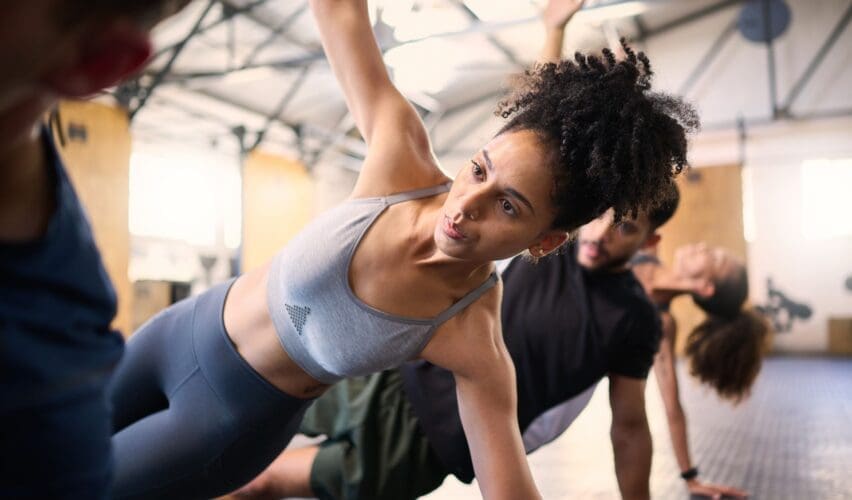
Replace them. Spend that time on planks, side planks, carries, and bird dogs. Spend that time learning how to breathe. Spend that time getting stronger in the big lifts. Your back will thank you when you’re seventy. Your performance will improve immediately. And ironically, you’ll probably end up with a better-looking midsection because you’re finally training the muscles the way they were designed to work.
Why are you still doing sit-ups? Is it because you saw a celebrity do them in a montage? Is it because your high school coach told you to thirty years ago? It’s time to move on. The science has changed. The results are clear. A strong core is a quiet core. It’s a stable core. It’s the silent engine that drives everything else you do. Stop making it scream with useless flexion and start letting it do its job: keeping you held together.
How much longer are you going to prioritize a temporary aesthetic over permanent function?
Thanks for stopping by!
We’d love to know what you think. Drop a comment below with your feedback or suggestions—we can’t wait to hear from you.
Wishing You The Best, Stable Grace Staff Writers & Editors
Ready to unlock your full potential? Discover a curated world of wisdom and transformative strategies in our bookstore. Explore the Collection