Fasting And Vigorous Exercise May Eliminate Toxins
You ever have one of those days where your house just feels… heavy? Not because of the furniture, but because of the mail piling up on the counter, the half-empty coffee mugs in the sink, and that weird “junk drawer” that won’t even close anymore. You know you need to clean it, but life gets in the way.
Now, imagine that same pile-up happening inside your cells.
Right now, as you read this, your body is engaged in a silent, invisible battle against its own trash. We’re talking about proteins—the tiny workhorses that make everything from your muscles to your memories possible. But proteins aren’t perfect. They break. They warp. They get “misfolded,” like a piece of origami that’s been crushed in someone’s pocket.
If you don’t clear out that cellular gunk, it starts to clump together. And those clumps? They’re the precursors to the things we fear most: Alzheimer’s, Parkinson’s, and that general feeling of “slowing down” that we often mistake for just getting old.
But here’s the good news: you have a built-in janitorial crew. You just have to know how to give them the keys to the building. It turns out that two of the most uncomfortable things we can do—pushing our bodies to the limit and skipping a few meals—are exactly what we need to trigger a deep, microscopic “spring cleaning.”
Let’s look at how this works, why it matters, and how you can actually make it happen without losing your mind.
The Gunk: When Good Proteins Go Bad
To understand the solution, we have to look at the mess. Proteins are essentially long chains of amino acids that fold into incredibly complex shapes. Think of them like specialized tools. A hammer has a specific shape to hit nails; a screwdriver has a specific shape to turn screws.
But sometimes, due to stress, heat, or just bad luck, a protein folds into the wrong shape. Now it’s not a tool anymore; it’s a piece of scrap metal taking up space. Even worse, these “misfolded” proteins are sticky. They find other broken proteins and start forming “aggregates.”
Think of it like a factory floor. If a few defective parts fall off the assembly line, it’s no big deal. But if you never sweep them up, eventually, the workers start tripping over them. Then the forklifts can’t get through. Eventually, the whole factory grinds to a halt. In your brain, this “clogging” shows up as plaques and tangles—the hallmarks of neurodegeneration.
So, how does the body sweep the floor? We’ve got two main systems.
The Shredder: The UPS System
First, there’s the Ubiquitin-Proteasome System, or UPS. Think of this as the office shredder. When a protein is identified as broken, the body slaps a “trash” sticker on it (that’s the ubiquitin). This sticker tells the proteasome—a barrel-shaped complex—to grab the protein, pull it inside, and chop it into tiny bits that can be reused. It’s highly specific and very efficient, but it can get overwhelmed if the trash starts piling up too fast.
The Incinerator: Autophagy
Then there’s the heavy hitter: Autophagy. The word literally means “self-eating,” which sounds like something out of a horror movie, but it’s actually the most beautiful thing your body does.
If the UPS is a shredder, Autophagy is the industrial incinerator. It’s a process where the cell identifies entire sections of “junk”—damaged organelles, clumps of proteins, even old bacteria—and wraps them in a double-layered bag called an autophagosome. That bag is then carried over to a lysosome, which is basically a bubble of acid. The junk gets dumped in, dissolved, and turned back into raw energy.
The problem? Most of us are living lives that keep the incinerator turned off. We eat too often, move too little, and stay too comfortable. To turn the cleaning crew on, we have to create a little bit of “good” stress.
Sweat Equity: Why Vigorous Exercise is a Cellular Power-Wash
We all know exercise is “good for you.” But let’s move past the “burn calories” conversation. When you push your body hard—and I mean really hard, where your heart is thumping and you’re struggling to hold a conversation—you’re doing something profound at a molecular level.
Vigorous exercise is a shock to the system. Your cells suddenly find themselves in an energy crisis. They’re burning through fuel faster than they can get it, and they’re under physical stress. This is exactly what triggers the cleaning crew.
The Stress Signal
When you’re sprinting or lifting heavy weights, your cells go into a state called “hormesis.” This is the idea that a small amount of stress makes a system stronger. Because the cell thinks it’s in trouble, it starts looking for internal resources. It says, “Hey, we need energy right now, and we don’t have time to wait for a snack. Let’s burn some of that trash in the corner.”
Research has shown that just one session of intense treadmill running can spike autophagy in the brain—specifically in the hippocampus, the part of your brain responsible for memory. You aren’t just building leg muscle; you’re literally power-washing your brain.
The “Miracle-Gro” Effect
Exercise also triggers the release of something called Brain-Derived Neurotrophic Factor, or BDNF. Scientists often call this “Miracle-Gro for the brain.” BDNF helps your neurons stay healthy, helps new ones grow, and—this is the kicker—it seems to help clear out the amyloid-beta plaques associated with Alzheimer’s.
But here’s the catch: a leisurely stroll through the park probably won’t cut it. To get these benefits, you need intensity. You want to get into that zone where your body realizes it’s not a drill. That’s when the cellular janitors start their shift.
The Power of the Empty Plate: Fasting as a Reset Button
If exercise is a power-wash, fasting is the deep-clean where you move all the furniture and scrub behind the fridge.
In our modern world, we’re almost never truly hungry. We eat because it’s noon, or because we’re bored, or because there’s a tray of donuts in the breakroom. Because of this, our cells are constantly in “growth mode.” When you’re in growth mode, insulin is high, and a pathway called mTOR (the “gas pedal” of cell growth) is floored.
As long as the gas pedal is down, the cleaning crew stays home. Why would the cell bother recycling old parts when it’s getting a constant delivery of new ones?
Flipping the Switch
When you stop eating for a significant period—say, 16 to 24 hours—your insulin levels drop, and another signal takes over. Glucagon, the “anti-insulin,” rises. This tells your body, “The trucks stopped coming. We need to find fuel inside.”
This is when autophagy goes into overdrive. Without the distraction of digesting new food, your cells finally have the time and the “hunger” to start breaking down those misfolded proteins we talked about earlier.
Think of it this way: if you keep a restaurant open 24/7, the floors never get mopped properly. You have to close the doors, turn off the lights, and let the cleaning crew do their thing. Fasting is simply closing the kitchen for a bit so the maintenance can happen.
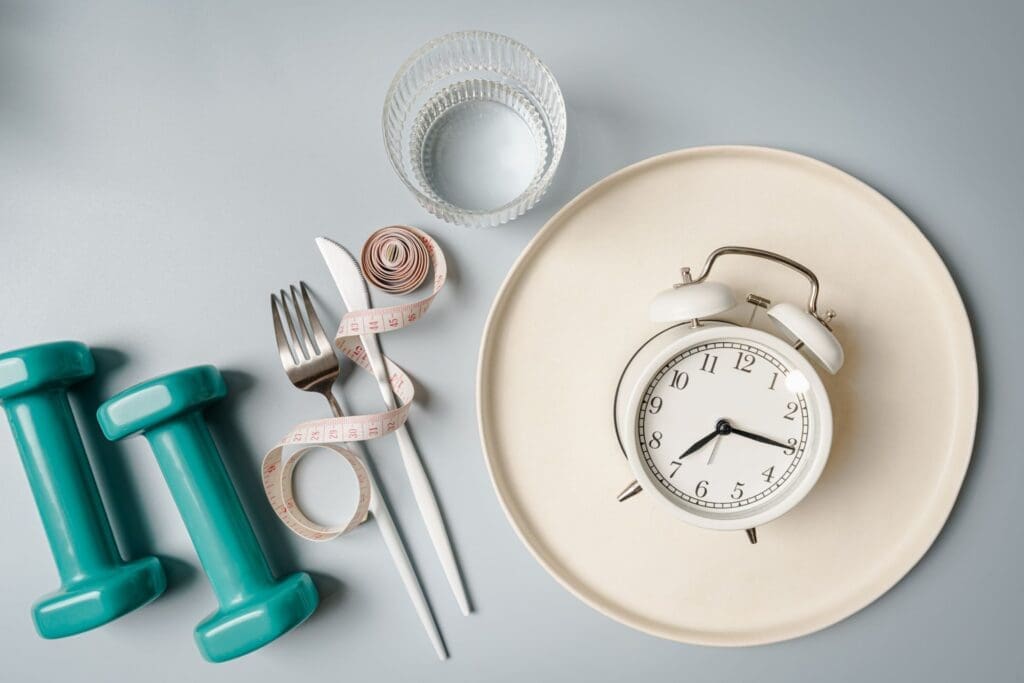
Beyond the 16/8
While “Intermittent Fasting” (the 16/8 method) is great for metabolic health, the real deep-cleaning—the kind that clears out decades of protein gunk—often requires a bit longer. Many researchers suggest that autophagy peaks somewhere between the 24 and 48-hour mark.
Now, I’m not saying you should stop eating for two days every week. But throwing in a 24-hour fast once a month? That’s like a cellular “factory reset.” It forces the body to be ruthless. It doesn’t just burn fat; it burns the “junk” that’s been sitting in your cells for years.
The Hormonal Symphony: Who’s Conducting the Clean-Up?
We tend to think of hormones as things that just make us moody or grow hair, but they are actually the master conductors of this entire process. If you want to clear out toxins, you have to get your hormones in tune.
Insulin: The Janitor’s Enemy
Insulin is the most important hormone to understand here. Its job is to store energy. It’s an anabolic hormone, meaning it builds things up. But as we’ve discussed, you can’t build and clean at the same time. If you’re constantly snacking, your insulin stays elevated, and your cleaning crew is essentially “locked out” of the building.
Glucagon: The Unsung Hero
Glucagon is insulin’s mirror image. It comes out when your blood sugar is low. Most people think its only job is to prevent you from fainting, but it’s actually a potent trigger for autophagy. When glucagon is high, the body is in “search and destroy” mode for cellular waste.
Growth Hormone (GH): The Protector
Wait, doesn’t fasting make you lose muscle? Not necessarily. One of the coolest things the body does during a fast is pump out Growth Hormone. In this context, GH isn’t trying to make you a bodybuilder; it’s trying to protect your “good” tissues (like muscle and bone) while the body burns “bad” stuff (like fat and broken proteins) for fuel. It’s the body’s way of ensuring that the cleaning process doesn’t accidentally throw out the good furniture.
Adrenaline and Cortisol: The “Fight” Signal
When you exercise vigorously, you’re flooded with adrenaline. While we usually think of this in terms of “fight or flight,” adrenaline also helps signal the breakdown of waste. It’s an “all hands on deck” signal that tells every cell to optimize itself for survival.
Putting It All Together: A Day in the Clean Life
So, how do you actually apply this? You don’t need to live like a monk or train like an Olympian. You just need to lean into the discomfort occasionally.
Imagine a “Power Day” once a week. You wake up and don’t eat breakfast. You keep your insulin low. Around noon, you hit the gym for a 30-minute session of high-intensity intervals or heavy lifting. At this point, you’re in a “fasted and loaded” state. Your body is screaming for energy, and it has nowhere to turn but its own internal stores and cellular waste.
By the time you sit down for dinner at 6:00 PM, you’ve hit the trifecta:
- Low Insulin (letting the janitors in).
- High Glucagon (giving them the “clean” signal).
- Physical Stress (triggering the “Miracle-Gro” for your brain).
You’ve essentially done a weeks worth of “cellular maintenance” in a single afternoon.
The Skeptic’s Corner: Is This Actually “Detox”?
The word “detox” has been hijacked by people trying to sell you charcoal lemonade and overpriced teas. Let’s be clear: your kidneys and liver do the heavy lifting when it comes to filtering blood. You don’t need a “juice cleanse” to remove toxins.
But what those juices can’t do—and what your liver can’t do for your brain cells—is clear out the internal waste. This isn’t about “flushing out” pesticides or heavy metals (though your body does that too); it’s about protein quality control. It’s about making sure the very machinery of your life isn’t getting gummed up by its own byproducts.
This is “detox” in its truest, most biological sense. It’s not a product you buy; it’s a process you trigger.
The Long Game: Why You Should Care Now
It’s easy to ignore cellular health because you can’t see it in the mirror. You can see a bicep growing or a waistline shrinking, but you can’t see the autophagy happening in your prefrontal cortex.
But here’s the thing: the “gunk” doesn’t pile up overnight. It’s a slow, decades-long process. The misfolded proteins you ignore in your 30s and 40s are the ones that become the neurological “debts” you have to pay in your 70s and 80s.
Think of it like an investment account. Every time you push through a hard workout, or every time you wait an extra four hours to eat, you’re making a deposit into your future self’s cognitive health. You’re ensuring that when you’re older, your “factory” is still running smoothly, rather than being a shuttered building full of rusted machinery.
Final Thoughts: Embrace the Edge
We live in a world designed for comfort. We have climate-controlled rooms, chairs that cradle our spines, and food available at the touch of a button. We’ve eliminated the “good” stresses that our ancestors faced daily.
But our bodies aren’t built for constant comfort. They’re built for the ebb and flow—the cycle of feast and famine, the cycle of rest and intense effort.
If you want to live a long, vibrant life, you have to step out of the comfort zone. You have to let yourself be a little hungry. You have to let yourself get out of breath. You have to give your body the chance to remember how to heal itself.
It’s not about being perfect. It’s not about never eating a burger or never taking a day off. It’s about balance. If you’re going to live big, you have to clean big.
So, next time you’re midway through a tough workout and your lungs are burning, or next time you’re feeling that mid-morning hunger pang, don’t reach for the towel or the snack bar immediately. Smile. That’s the sound of the cleaning crew finally getting to work.
Your future self will thank you for the housecleaning.
Thanks for stopping by!
We’d love to know what you think. Drop a comment below with your feedback or suggestions—we can’t wait to hear from you.
– Best, Stable Grace Staff Writers & Editors
Ready to unlock your full potential? Discover a curated world of wisdom and transformative strategies in our bookstore. Explore the Collection